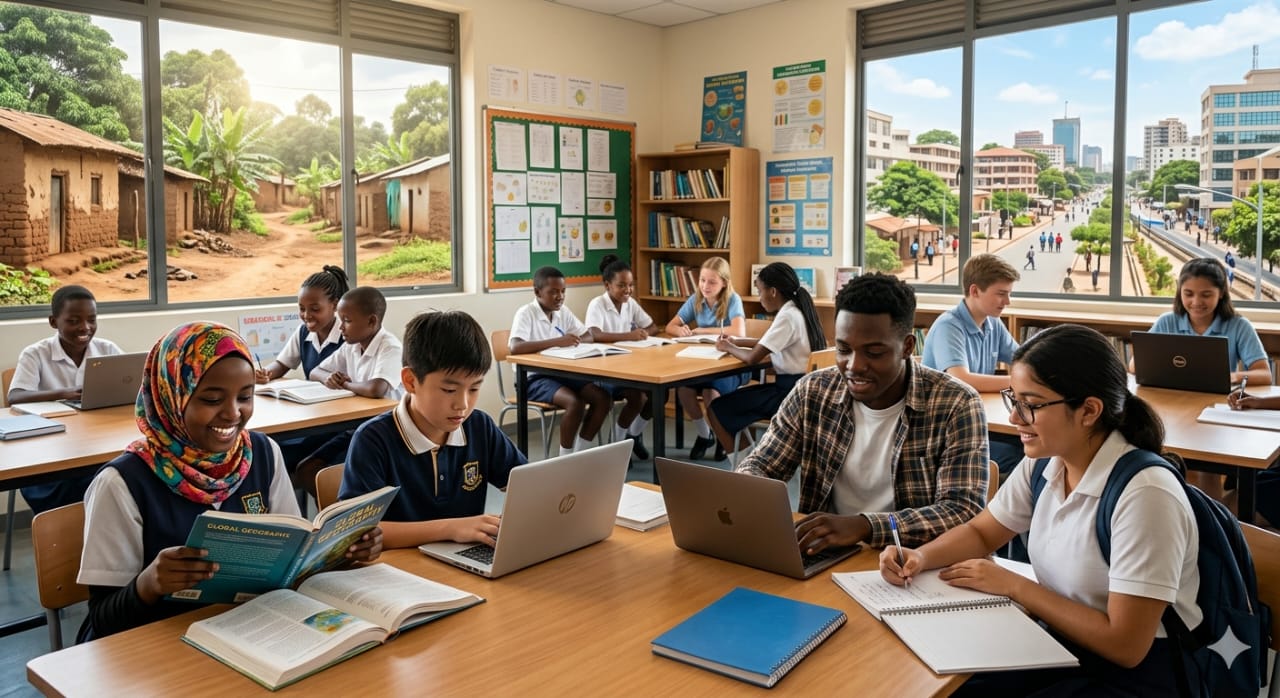
Education plays a vital role in breaking the cycle of poverty by providing individuals with the knowledge, skills, and opportunities needed to improve their lives. It remains one of the most powerful tools for social mobility. Yet its impact depends not only on access but also on quality. Poverty is often passed from one generation to another when families lack access to quality education, stable employment, and essential resources. However, education serves as a powerful tool that can help people overcome these barriers and create a better future for themselves and their communities.
Through education, individuals gain the skills required to secure better-paying jobs and achieve financial stability. A well-educated person is more likely to find employment opportunities that offer higher wages, benefits, and career growth. As income levels increase, families can afford better housing, healthcare, and nutrition, leading to an improved quality of life. In addition, educated parents are more likely to prioritize the education of their children, helping to prevent poverty from continuing into the next generation.
A growing challenge across many countries is the gap between education and employability. Graduates increasingly face labor markets that demand practical skills, adaptability, and technological competence. These skills enable individuals to make informed choices about their finances, health, and personal development. Education also promotes critical thinking, problem-solving, and decision-making abilities.
Breaking the cycle of poverty requires more than classrooms. It requires relevant curricula, skilled teachers, access to technology, and pathways into employment. Education fosters innovation and entrepreneurship. People who receive quality education are better equipped to start businesses, create jobs, and stimulate economic development within their communities. This not only benefits individuals but also contributes to national progress and poverty reduction on a larger scale.
When education equips individuals to create value and solve problems, its impact extends beyond personal success. Entire communities benefit from increased productivity, innovation, and social participation. Education empowers people to understand their rights, participate in civic activities, and contribute positively to society. Communities with higher levels of education often experience lower crime rates, improved public health, and stronger economic growth.
In conclusion, education is one of the most effective means of breaking the cycle of poverty. By providing knowledge, opportunities, and empowerment, it helps individuals achieve economic independence and build a brighter future for themselves and future generations. Education remains a ladder out of poverty, but the ladder must be strong enough to reach emerging opportunities.