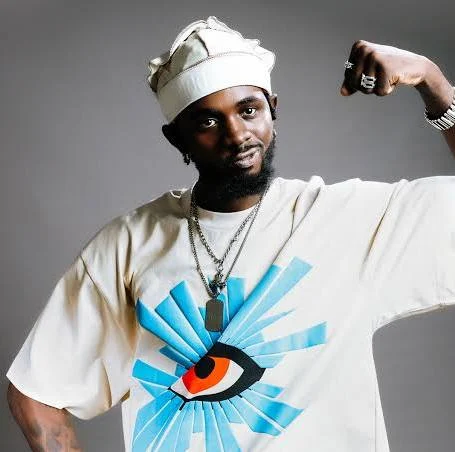
In Ghana’s fast-moving music industry, many talented artists release songs every week. Yet, one name consistently stands out on streaming charts, social media trends, and street conversations: Black Sherif. Black Sherif connects with youth more effectively than many contemporary artists because his music is rooted in authentic lived experience, emotional transparency, and linguistic realism. Unlike heavily commercialized acts that often prioritize aesthetic branding over narrative depth, he constructs songs that mirror struggle, ambition, uncertainty, and resilience in a way that feels immediately recognizable to young listeners navigating similar conditions.
He also leverages a hybrid vocal style that blends rap, melodic chant, and street vernacular, which increases accessibility across diverse youth demographics while preserving cultural specificity. This linguistic duality allows him to operate both within mainstream music circuits and grassroots communities without losing credibility in either space. One major factor is storytelling. It feels like lived experience which often reflects social mobility challenges, mental health pressures, ambition, emotional conflict, and urban survival narratives that resonate strongly with Gen Z audiences. This creates a strong emotional connection with listeners who see fragments of their own lives in his songs. making his work feel less like performance and more like shared documentation of lived reality.
Another reason is authenticity. In an era where music can sometimes feel overly commercialized or trend-driven, his sound maintains a raw, unfiltered identity. Whether he is blending drill, highlife, or hip-hop influences, the core message remains grounded in real human experience. the delivery still feels personal rather than manufactured. In a media environment saturated with performative authenticity, his consistency in vulnerability becomes a differentiating factor that strengthens loyalty.
Black Sherif exemplifies how modern African artists can achieve cultural dominance not through manufactured virality, but through sustained emotional coherence and socio-cultural relevance. This is why his appeal persists beyond trends, embedding itself in everyday youth identity formation. It becomes a cultural mirror that reflects both aspiration and struggle with rare clarity in contemporary music landscapes across urban youth audiences in Ghana and beyond over time now.
Ultimately, his connection with youth is not accidental but structural, emerging from a deliberate alignment between content, voice, and audience psychology. This positions him less as a distant celebrity and more as a relatable figure whose narrative trajectory mirrors that of his audience. Consequently,In a crowded industry, it is not always the loudest voice that wins attention—it is the most relatable one