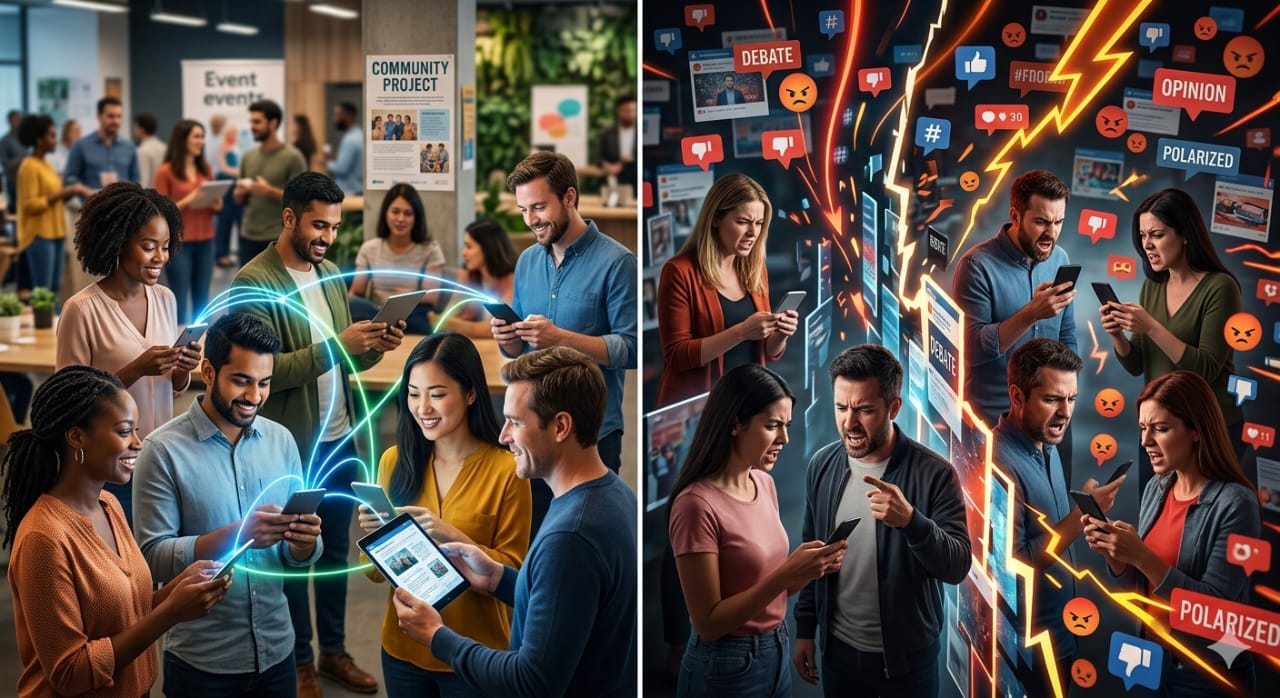
Social media has transformed the way people communicate, share ideas, and stay informed. While these platforms have connected billions of people around the world, they have also raised concerns about their impact on social unity. Many people believe that social media is making society more divided by encouraging polarization, spreading misinformation, and creating echo chambers where users are exposed only to views similar to their own. Social media was initially designed to connect people, but its current structure often encourages polarization.
One major reason social media can increase division is the way its algorithms operate. Algorithms prioritize engagement, and emotionally charged content; especially outrage tends to generate the highest interaction. These systems are designed to show users content that aligns with their interests and beliefs. As a result, people often interact with information that reinforces their existing opinions rather than challenging them. Over time, this can strengthen biases and make individuals less willing to understand opposing perspectives.
In addition, social media allows information to spread rapidly, regardless of its accuracy. False or misleading content can gain attention faster than verified facts, especially when it appeals to emotions such as anger or fear. This can deepen disagreements on political, social, and cultural issues, leading to greater mistrust among different groups.
However, social media is not the sole cause of social division. It amplifies existing tensions within society—political, cultural, and economic. for . It can also be a powerful tool for education, awareness, and meaningful dialogue. Many individuals and organizations use these platforms to promote understanding and bring people together around shared causes.
Ultimately, social media is a double-edged sword. While it has the potential to connect people, its current use often contributes to social divisions. Addressing these challenges requires responsible platform management and more critical engagement from users. The challenge lies in how platforms are designed and how users engage with them. Critical media literacy becomes essential: the ability to question sources, recognize bias, and engage with opposing viewpoints without immediate dismissal.
Social media is not inherently divisive. Its impact depends on how attention is structured and consumed.