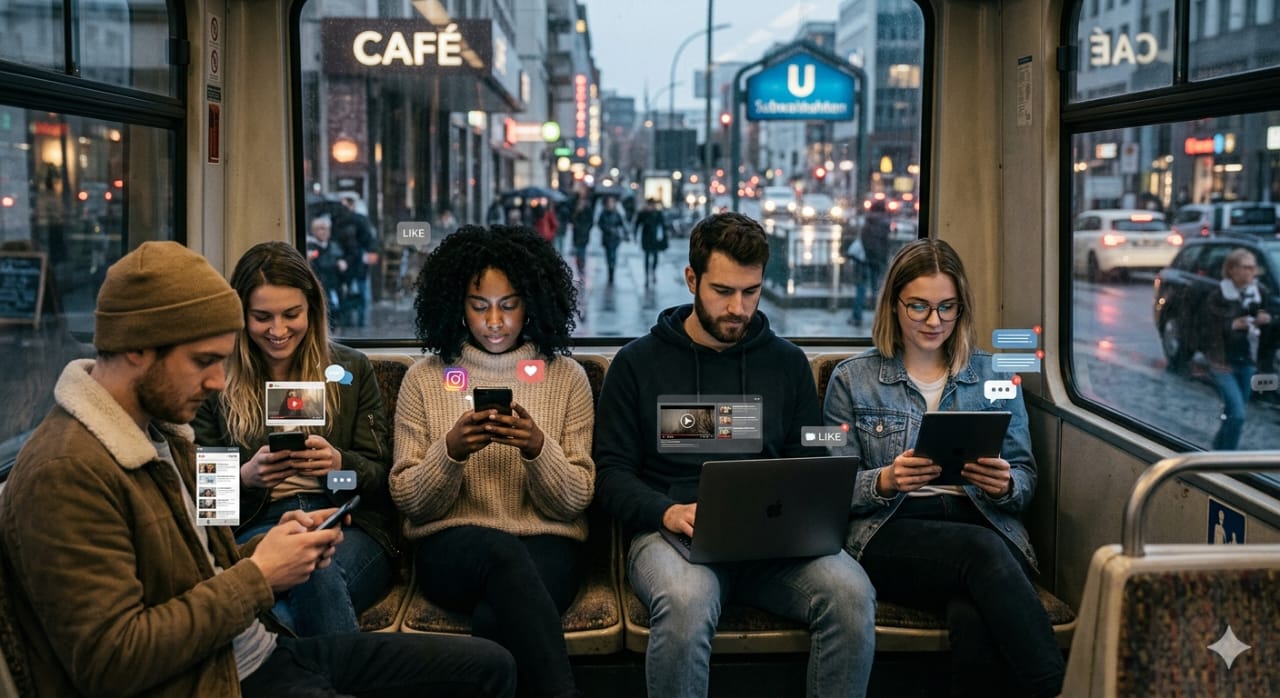
Young people are spending more time online than ever before because the internet has become the central infrastructure of their social, educational, and economic lives. For many young people today, the internet is no longer just a tool; it is a place where life happens. The widespread availability of smartphones and affordable internet access has removed traditional barriers to access, making connectivity constant rather than occasional and has made digital platforms constantly accessible.
Additionally, academic and professional demands increasingly rely on digital tools, making internet use not only recreational but also necessary for productivity and learning. Peer interaction has also shifted online, with messaging apps and virtual communities becoming primary spaces for communication and identity formation among youth. News is consumed online. Businesses are built online. Entertainment, education, online gaming environments are designed to maximize engagement, often encouraging users to remain connected for extended periods and even relationships increasingly begin through digital platforms.
Algorithms continuously personalize content, keeping users engaged by aligning what they see with their interests and behaviors. This convergence of convenience, entertainment, and social connection explains why online engagement among young people continues to rise steadily. While concerns about overuse persist, it is important to recognize that online environments are deeply integrated into modern development pathways. From entertainment and education to social belonging and career opportunities, the internet has become a multifunctional space that supports nearly every aspect of youth life.
The increase in screen time among young people is less a matter of choice alone and more a reflection of a digitally structured society that rewards constant connectivity. Understanding this shift is essential for developing healthier digital habits, improving platform design, and creating balanced policies that support both well-being and technological progress.
The issue is not technology itself. The issue is balance. It also calls for greater awareness among parents educators and policymakers to ensure that digital engagement remains purposeful, safe, and beneficial for long term personal development without undermining everyday social and academic responsibilities. As digital spaces become more integrated into daily life, society must learn how to use them intentionally rather than compulsively.
The internet has changed how we live. The challenge now is ensuring it does not quietly begin to control how we think, interact, and value ourselves.