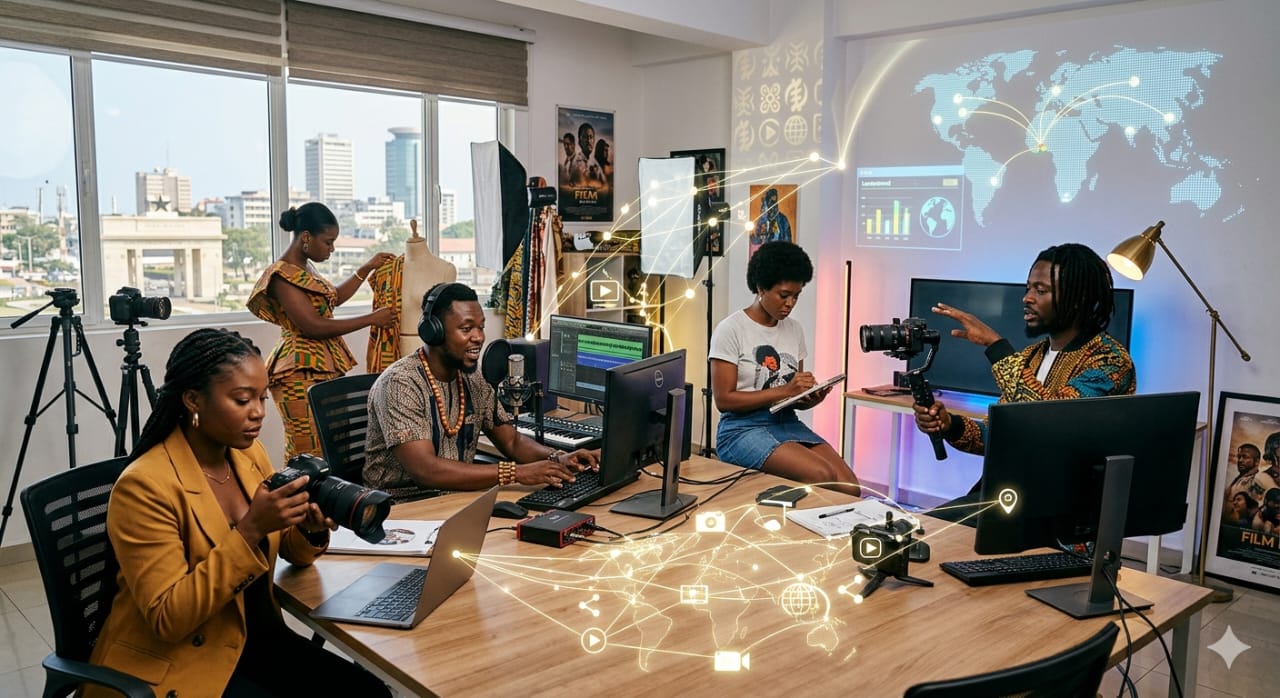
For years, Ghanaian creators have produced exceptional work across music, film, fashion, digital content, and visual arts, often with limited resources and little international attention as their counterparts elsewhere. Today, however, the conversation is changing. The rise of social media platforms, streaming services, and global digital communities has have reduced barriers that once limited exposure and created opportunities that were once unavailable, allowing Ghanaian talent to reach audiences far beyond the country’s borders. Talent can travel faster than ever before.
Today, that reality appears to be changing. The growing visibility of Ghanaian creators is not accidental. Many have embraced digital tools to showcase their creativity, tell authentic stories, and build personal brands that resonate with global audiences. Unlike previous generations that depended heavily on traditional media gatekeepers, today’s creators can connect directly with millions of people worldwide. This shift has enabled unique Ghanaian perspectives, culture, and creativity to gain recognition on an unprecedented scale.
At the same time, international audiences are increasingly seeking diverse voices and fresh narratives. Ghanaian creators have benefited from this trend by offering content that reflects local experiences while maintaining universal appeal. Whether through viral social media campaigns, innovative fashion designs, compelling films, or music that blends traditional influences with modern sounds, creators from Ghana are proving that local stories can have global impact.
Despite this progress, challenges remain. Limited funding, infrastructure gaps, and unequal access to global markets continue to affect many talented individuals. Recognition matters because it attracts investment, partnerships, and opportunities and it is growing, but sustained success requires stronger support systems, investment, and opportunities for creators to compete internationally.
Nevertheless, the momentum is undeniable. Ghanaian creators are no longer waiting to be discovered; they are actively shaping conversations, influencing trends, and building audiences across continents. While there is still work to be done, the increasing global attention suggests that Ghanaian creativity is finally receiving the recognition it has long deserved, marking an exciting chapter for the country’s creative industry.
The future of Ghana’s creative industry may not be determined by individual stars alone. It may depend on whether the ecosystem around them becomes strong enough to nurture the next generation. Global recognition is encouraging. Sustainable growth is the real goal.