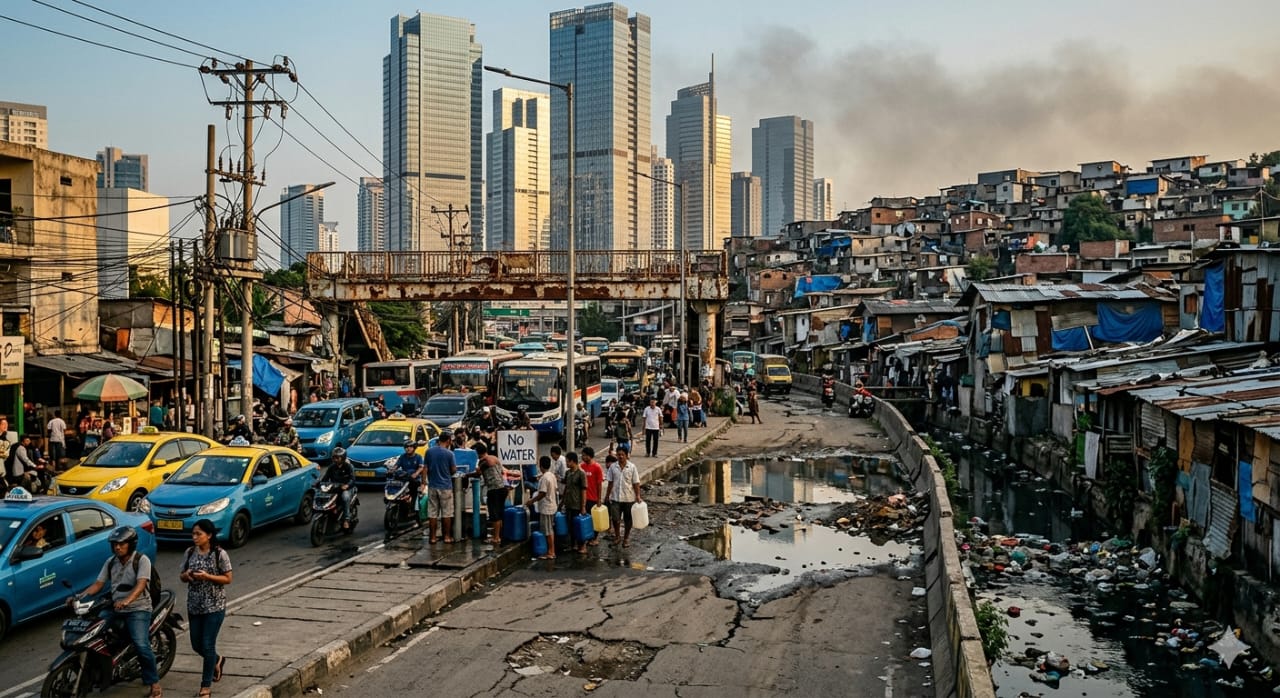
Development challenges rarely emerge overnight. More often, they grow quietly in the background, often giving societies years of warning before reaching crisis levels while societies focus on immediate concerns and short-term gains. By the time these issues attract widespread attention, they have often evolved into full-scale crises that are far more difficult and expensive to address.
One of the greatest obstacles to sustainable development is the tendency to overlook warning signs. Aging infrastructure, inadequate urban planning, environmental degradation, and weaknesses in education or healthcare systems may seem manageable in the present. However, when population growth, economic pressures, or natural disasters place additional strain on these systems, their vulnerabilities become impossible to ignore. What was once considered a minor concern quickly transforms into a major challenge affecting millions of people.
Another reason these problems are neglected is that their consequences are often gradual rather than immediate. Policymakers and institutions frequently prioritize visible issues that demand urgent action, leaving long-term risks underfunded and understudied. As a result, communities continue operating under the assumption that existing systems will remain functional indefinitely. Unfortunately, development does not reward complacency. Delayed action often increases both the social and economic costs of solving problems later.
Urban congestion is another. Cities expand rapidly while infrastructure struggles to keep pace. By the time traffic, housing shortages, and public service failures become severe, solutions are far more expensive and difficult to implement. Climate vulnerability, educational quality gaps, and healthcare workforce shortages follow similar patterns. They are often discussed when emergencies occur, rather than when prevention is still possible.
The impact of ignoring development challenges extends beyond infrastructure and public services. It can deepen inequality, reduce economic opportunities, weaken public trust, and limit a nation’s ability to respond effectively to future shocks. When preventive measures are postponed, vulnerable populations bear the greatest burden, creating cycles of hardship that can persist for generations.
The challenge is that preventive policies rarely generate headlines. Their success is measured by problems that never happen. However, effective development depends on long-term thinking. Governments, businesses, and citizens must become better at recognizing emerging risks before they become national emergencies. The most expensive problems are often the ones that were visible for years but ignored until they could no longer be avoided.